Updated 13 min read
Event planning and event production overlap more than the titles suggest. Planning usually centers on the venue, budget, schedule, vendors and guests. Production usually centers on the physical build, the technical show and running the live event. Many companies, Event Pros LA among them, do both, so compare scope line by line, not job titles.
Key takeaways
- Planning usually centers on the venue, budget, schedule, vendors and guests; production on the physical build, the technical show and running the live event.
- Many companies do both, so compare scope line by line, not job titles.
- The useful question is who is responsible for each part of your event, from the first plan through the final breakdown.
What event planning can include
Event planning turns an idea, a date and a budget into a plan that works. Depending on the planner and the agreement, it can cover:
- The venue: the search, site visits, the contract and the venue's own requirements.
- The budget: vendor quotes, the working budget and tracking spend against what was approved.
- The schedule: the planning timeline, the decision dates and the timeline for the day itself.
- Vendors: sourcing, contracts and coordination across catering, rentals, entertainment and the other suppliers.
- Guests: invitations or registration, travel and hotel blocks, dietary and accessibility needs, and arrivals.
- Design: many planners also lead the look of an event, from the concept and palette to the floor plan, florals and décor.
Planners work independently, in-house at companies, at venues, and inside agencies and production companies. On the day, the role ranges from coordinating vendors to running the whole event.
What event production can include
Event production is the work of building and running the live event: the physical environment, the technical systems, the schedule of cues and the crews who deliver them, from setup through the program to breakdown. The term comes from live entertainment and television, where a producer is responsible for the show itself: what the audience sees and hears, in what order, and what happens when something changes.
Depending on the event and the agreement, production can include:
- Creative direction and design: the concept, the stage and set, branded environments and the layout of the room.
- Fabrication and installation: scenic pieces, stages, booths and custom elements, built by fabricators and installed on site.
- Technical production: sound, lighting, video, LED walls, projection, rigging and livestreaming, specified for the room and the program.
- Production documents: floor plans, the production schedule, staffing schedules and the run of show, the minute-by-minute script of the event.
- Rehearsals: technical and speaker rehearsals that test the run of show before guests arrive.
- Calling the show: giving the live cues to the lighting, audio, video and stage crews, from the run of show. Our run-of-show guide explains the document and the show caller's role.
- Load-in and strike: scheduling crews and deliveries into the venue's access windows, and out again.
On larger events, the production team adds specialist roles such as stage managers, technical directors and logistics coordinators.
Where the roles overlap
Much of the work belongs to both roles. Planners and producers both manage budgets, vendors, venues and timelines. Many planners design, and many producers plan. Plenty of companies do both, and titles vary by company, region and industry.
Two more titles come up often. An event coordinator usually focuses on logistics and execution: confirming details and keeping vendors and the timeline on track, often on the day itself. An event manager often runs an organization's events overall, whether in-house, at a venue or at an agency.
So the title on a proposal tells you less than its scope. What matters is which responsibilities are included, who owns each one, and where one company's work hands off to another's.
Who does what on a produced event
Even with one company leading, a produced event usually involves several parties. An AV company supplies and operates the sound, lighting, video and staging equipment. A fabricator builds custom scenic pieces, stages and booths. The venue sets the rules for its space. This is the usual division of work; every contract draws the lines a little differently.
| Responsibility | Event producer | AV company | Fabricator | Venue |
|---|---|---|---|---|
| Venue contract and house rules | Usually reviews the contract for production terms | Works within the house rules; may be the venue's in-house provider | Builds to the venue's rules | Sets access hours, required vendors and insurance terms |
| Concept and design | Usually leads it, or works from a designer's concept | Advises on screens, sightlines and lighting | Engineers approved designs for building | Approves anything fixed to its walls, floors or ceilings |
| Scenic, stage and booth builds | Usually specifies and coordinates them | Supplies stages and truss in some packages | Builds, delivers and installs them | Sets build and fire-safety rules |
| Sound, lighting, video, LED and rigging | Usually specifies what the program needs | Supplies the equipment and the technicians who run it | Builds in mounts or power runs where the design needs them | May require its in-house AV provider or charge for outside equipment |
| Power, rigging points, dock and freight | Usually plans them with the venue | States its power and rigging loads | Plans crates, freight and install access | Supplies or limits power, rigging points and dock time |
| Run of show and rehearsals | Usually writes the run of show and schedules rehearsals | Programs the cues and crews the rehearsals | Rarely involved | Sets when rooms are free to rehearse |
| Calling the show | Usually calls the cues, or directs a stage manager who does | Runs the cues; sometimes provides the show caller | Not involved | Not usually involved |
| Load-in and strike | Schedules crews and deliveries; any on-site supervision is agreed in the scope | Installs and removes its own equipment | Installs and removes its builds | Sets the access windows and any overtime charges |
| Permits, insurance certificates and fire-marshal review | Usually identifies what's needed and coordinates the paperwork | Supplies its insurance certificate | Supplies insurance and flame-retardancy certificates | Sets insurance terms; may require a fire-marshal review |
| Settling invoices and the wrap | Usually reconciles vendor invoices against the budget, as agreed | Invoices equipment, labor and any overtime | Invoices the build; may store it for reuse | Issues the final bill |
Typical split; contracts differ
Venue contract and house rules
- Event producer
- Usually reviews the contract for production terms
- AV company
- Works within the house rules; may be the venue's in-house provider
- Fabricator
- Builds to the venue's rules
- Venue
- Sets access hours, required vendors and insurance terms
Concept and design
- Event producer
- Usually leads it, or works from a designer's concept
- AV company
- Advises on screens, sightlines and lighting
- Fabricator
- Engineers approved designs for building
- Venue
- Approves anything fixed to its walls, floors or ceilings
Scenic, stage and booth builds
- Event producer
- Usually specifies and coordinates them
- AV company
- Supplies stages and truss in some packages
- Fabricator
- Builds, delivers and installs them
- Venue
- Sets build and fire-safety rules
Sound, lighting, video, LED and rigging
- Event producer
- Usually specifies what the program needs
- AV company
- Supplies the equipment and the technicians who run it
- Fabricator
- Builds in mounts or power runs where the design needs them
- Venue
- May require its in-house AV provider or charge for outside equipment
Power, rigging points, dock and freight
- Event producer
- Usually plans them with the venue
- AV company
- States its power and rigging loads
- Fabricator
- Plans crates, freight and install access
- Venue
- Supplies or limits power, rigging points and dock time
Run of show and rehearsals
- Event producer
- Usually writes the run of show and schedules rehearsals
- AV company
- Programs the cues and crews the rehearsals
- Fabricator
- Rarely involved
- Venue
- Sets when rooms are free to rehearse
Calling the show
- Event producer
- Usually calls the cues, or directs a stage manager who does
- AV company
- Runs the cues; sometimes provides the show caller
- Fabricator
- Not involved
- Venue
- Not usually involved
Load-in and strike
- Event producer
- Schedules crews and deliveries; any on-site supervision is agreed in the scope
- AV company
- Installs and removes its own equipment
- Fabricator
- Installs and removes its builds
- Venue
- Sets the access windows and any overtime charges
Permits, insurance certificates and fire-marshal review
- Event producer
- Usually identifies what's needed and coordinates the paperwork
- AV company
- Supplies its insurance certificate
- Fabricator
- Supplies insurance and flame-retardancy certificates
- Venue
- Sets insurance terms; may require a fire-marshal review
Settling invoices and the wrap
- Event producer
- Usually reconciles vendor invoices against the budget, as agreed
- AV company
- Invoices equipment, labor and any overtime
- Fabricator
- Invoices the build; may store it for reuse
- Venue
- Issues the final bill
When a separate planner is also involved, they often keep the venue relationship, the guest side and the overall timeline, while the producer works from the same plan.
Where a DMC fits
A destination management company (DMC) is a local specialist in a destination. It usually arranges ground services for visiting groups: transportation, local venues and suppliers, tours and activities, and the local knowledge behind them. A DMC is most useful when a group travels somewhere the planning team doesn't know well, and it often works alongside the planner or producer rather than replacing them.
Which kind of help your event needs
Start from what the event asks for, not from a job title. Each of these adds production work, whoever ends up doing it:
- A program that runs on cues. A keynote, an awards segment or a stage where lighting, video and speakers change on time, as at conferences and summits, galas and fundraisers, or sales kickoffs.
- A room that has to change. Scenic builds, custom lighting, a branded environment or a booth, as in brand activations and launches, or trade show booths.
- A raw site. A park, a tent, a warehouse or a private home, where power, restrooms, flooring and often permits have to be brought in, as at festivals and public events, or private estate events.
- An audience with a reason to pay attention. A product launch, a sales kickoff, a trade show floor or a fundraising appeal, where the program has a job to do.
When the venue supplies the catering, the AV and most of the look, and the program is a welcome, a meal and a toast, planning may be most of the work. When several of the points above apply, make sure each production responsibility is named in the scope. If you're deciding how much of it your own team should carry, our guide to choosing between an in-house team and an event production company walks through the options.
Three examples from our work
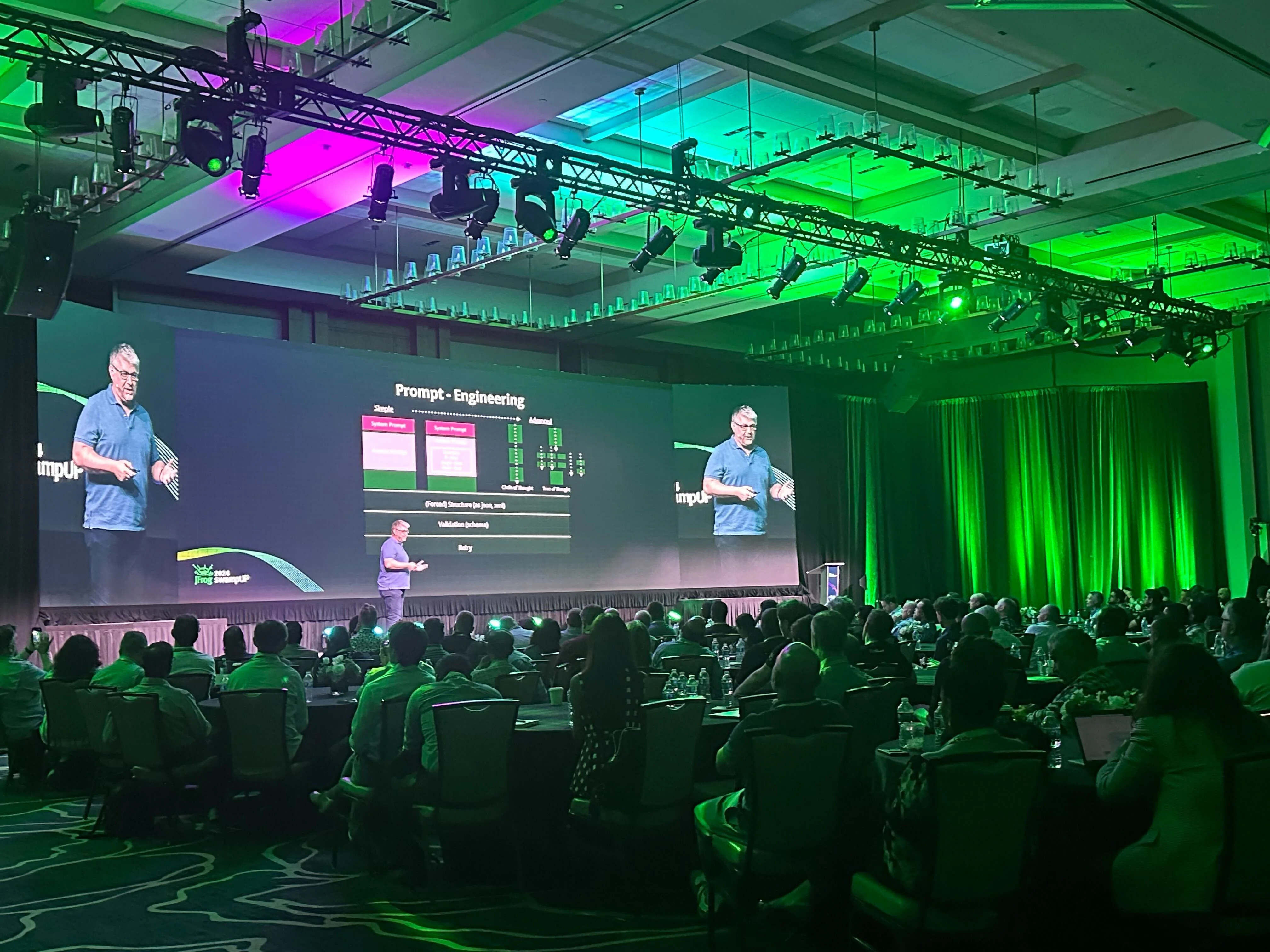
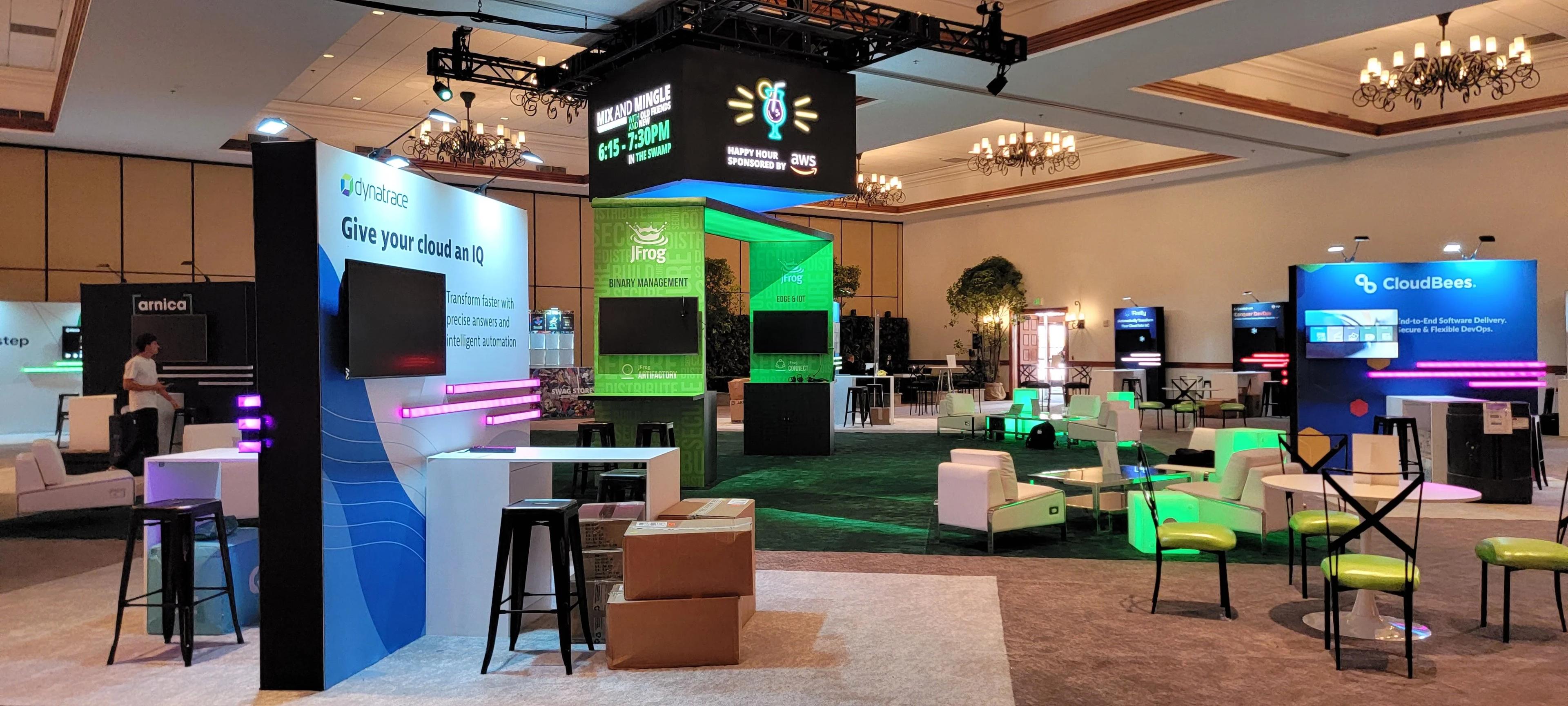
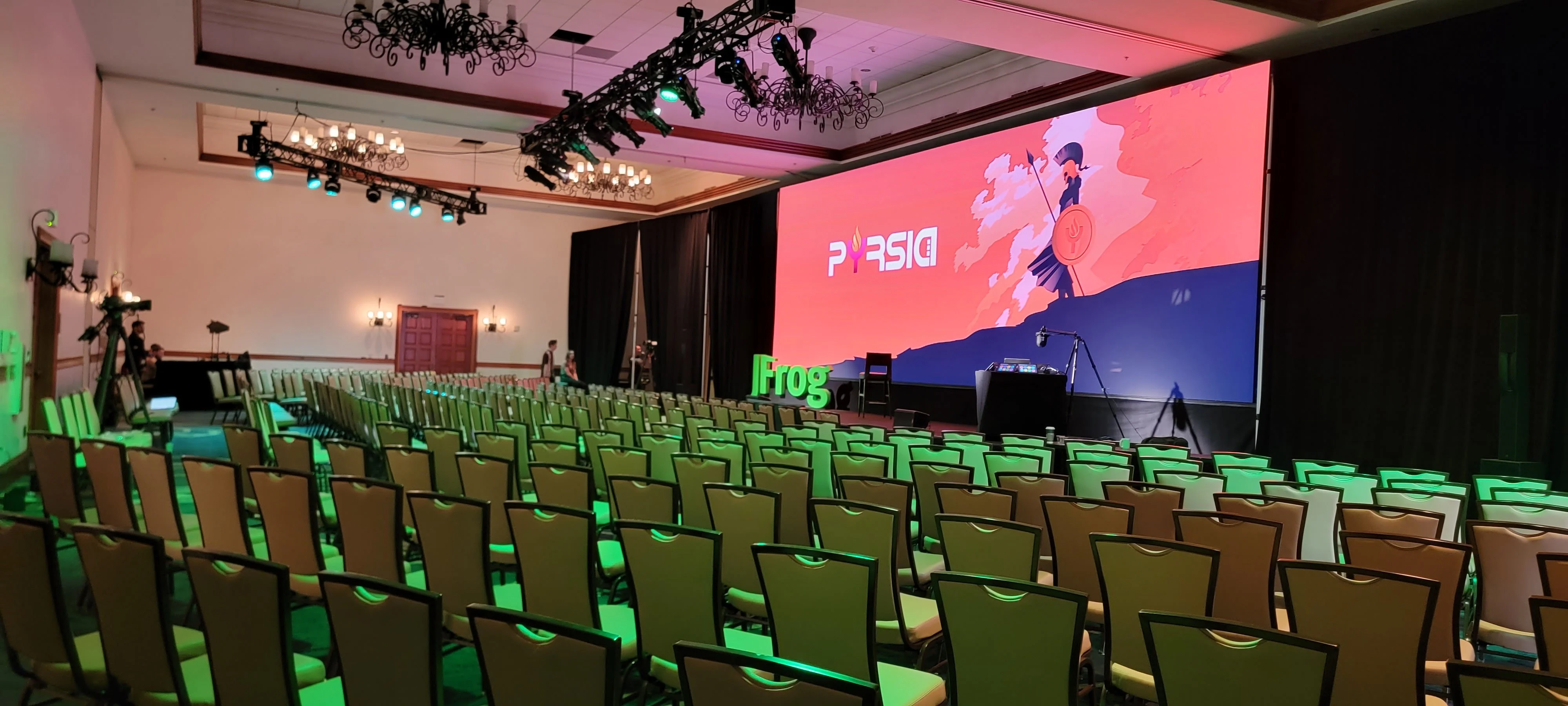
- Cues and a stage: for JFrog's swampUP conference in the San Diego area, Event Pros LA contributed production leadership as a subcontracted production partner, with keynote staging, full AV and a multi-track program.
- A room transformed: the Artlist Studio launch was built as a screening room for 200+ guests, with live product demos at wall scale.
- A raw site: the cultural festival at Rancho Park is built in the park itself, with its stages, vendors and services brought into open parkland.
Compare proposals by scope, not title
One company can cover the whole scope, or several specialist partners can split it. Either way, every responsibility needs a named owner. Use this checklist with each proposal: fill in the last column from what the proposal actually says, and ask about any row you can't fill.
| Responsibility | What to confirm | Who owns it in your proposal |
|---|---|---|
| Venue and budget | Who searches, negotiates and signs the venue contract; who builds the budget, tracks spend and approves changes | Fill in from the proposal |
| Creative and design | Who develops the concept, the floor plan and the look, how many revisions are included, and who signs off | Fill in from the proposal |
| Vendor management | Who sources, contracts, schedules and pays each vendor, including any you or the venue already require | Fill in from the proposal |
| AV and staging | Who specifies the sound, lighting, video and stage, who supplies and runs them, and who coordinates them with the venue | Fill in from the proposal |
| Run of show and rehearsals | Who writes and updates the run of show, and which rehearsals are scheduled and included | Fill in from the proposal |
| Live cues | Who calls the show during the event, and how they reach the technical crews | Fill in from the proposal |
| Guest logistics | Who handles invitations or registration, travel, arrivals, dietary needs and accessibility | Fill in from the proposal |
| Setup and breakdown | Which vendors set up and break down their own work, the access windows, and whether anyone supervises on site | Fill in from the proposal |
| Wrap-up | Who settles vendor invoices, reconciles the budget and runs a debrief if you want one | Fill in from the proposal |
Scope checklist
Venue and budget
- What to confirm
- Who searches, negotiates and signs the venue contract; who builds the budget, tracks spend and approves changes
- Who owns it in your proposal
- Fill in from the proposal
Creative and design
- What to confirm
- Who develops the concept, the floor plan and the look, how many revisions are included, and who signs off
- Who owns it in your proposal
- Fill in from the proposal
Vendor management
- What to confirm
- Who sources, contracts, schedules and pays each vendor, including any you or the venue already require
- Who owns it in your proposal
- Fill in from the proposal
AV and staging
- What to confirm
- Who specifies the sound, lighting, video and stage, who supplies and runs them, and who coordinates them with the venue
- Who owns it in your proposal
- Fill in from the proposal
Run of show and rehearsals
- What to confirm
- Who writes and updates the run of show, and which rehearsals are scheduled and included
- Who owns it in your proposal
- Fill in from the proposal
Live cues
- What to confirm
- Who calls the show during the event, and how they reach the technical crews
- Who owns it in your proposal
- Fill in from the proposal
Guest logistics
- What to confirm
- Who handles invitations or registration, travel, arrivals, dietary needs and accessibility
- Who owns it in your proposal
- Fill in from the proposal
Setup and breakdown
- What to confirm
- Which vendors set up and break down their own work, the access windows, and whether anyone supervises on site
- Who owns it in your proposal
- Fill in from the proposal
Wrap-up
- What to confirm
- Who settles vendor invoices, reconciles the budget and runs a debrief if you want one
- Who owns it in your proposal
- Fill in from the proposal
The useful question is who is responsible for each part of your event, from the first plan through the final breakdown.
For how fees and vendor costs should appear in a proposal, see what shapes an event budget. To set several finalists side by side, use how to compare corporate event proposals.
How Event Pros LA combines both
Event Pros LA combines event planning, design and production. A lead producer coordinates the agreed scope across the venue, budget, creative work, vendors, technical production and on-site team. Our team and specialist partners work from one production plan, with responsibilities established before the event.
For a full-event engagement, we lead the planning, design and production from the first idea to the final breakdown, giving you one accountable point of contact throughout. Or hire us for the part you need, such as event design, venue sourcing or AV production. We'll agree the deliverables, coordinate with your event team and take responsibility for our scope from planning through handover.
Vendors you already work with, partners your brand requires and a venue's exclusive suppliers can all be part of the plan. If your team wants to keep the budget and creative decisions while a producer runs the work, how to retain control when hiring an event producer sets out the approvals to agree first. The Event Services page describes each of our eleven service disciplines.
Event Pros LA has produced our annual corporate event for 600+ attendees for multiple years, and we could not imagine working with anyone else. They oversee the entire process from start to finish — planning, logistics, vendors, timelines, and on-site execution.
Questions to ask before hiring
These work whatever title a company uses. Under each is what a clear answer includes.
- Who is my point of contact from the first call through the event, and will that person be on site?A clear answer names one person, says when they'll be on site and who covers if they're unavailable. On a full-event engagement with Event Pros LA, that's your lead producer, who is on site for the event.
- Who calls the show on the day?A clear answer names the role, whether that's the producer, a stage manager or the AV company's lead, and explains how that person reaches the crews and you.
- Which parts do you do with your own team, and which go to specialist partners?A clear answer lists the partners by discipline, such as AV, fabrication, catering and staffing, and says who manages each of them.
- How are vendor costs passed through, and is anything marked up?A clear answer shows the fee and the vendor costs on separate lines and explains any markup, commission or pass-through fee. If you're talking to Event Pros LA, ask us to explain our fee and vendor costs in the proposal.
- Can I see a run of show from an event like mine?A clear answer is a real document, redacted where needed, that shows times, cues and who owns each one.
- Who handles permits, insurance certificates and the venue's production rules?A clear answer says who identifies what's needed, who files it and who collects certificates from each vendor. For events in the City of Los Angeles, the Los Angeles permits guide shows which agency handles what.
- What happens if a vendor fails a week out, or on the day?A clear answer describes the backup: alternative suppliers, spare equipment where it matters, and who makes the call on the day.
- What do I get after the event: settled invoices, a reconciliation, a debrief?A clear answer says which of these are in the scope. With Event Pros LA, the wrap-up covers vendor settlements and budget reconciliation as agreed, and a debrief when you want one.
Clear answers to these tell you more than a portfolio does. For a fuller hiring checklist, see how to choose a corporate event planner in Los Angeles.
Frequently asked questions
Is an event producer more expensive than an event planner?
Not necessarily, because the title doesn't fix the scope. Compare like for like: what each fee covers, the vendor costs, and the work your own team would still have to do. A proposal that includes design, technical production and on-site management will cost more than one that covers coordination alone, and which is right depends on the event. Ask each company for an itemized proposal that explains its fee and vendor costs.
What shapes an event budgetDoes a private party need production as well as planning?
It depends on what the party includes. Staging, lighting and sound, a custom dance floor, entertainment that runs on cues, or a tent and power at a private home all add production work, whoever takes it on. A bar or bat mitzvah with a candle-lighting ceremony and a DJ-led program usually does. A dinner for twenty in a restaurant's private room usually doesn't.
Explore Private EventsWhat does it mean to “call the show”?
It means giving the live cues during the event, from the run of show: when the lights change, the video rolls, a speaker walks on or the music comes up. The show caller talks to the lighting, audio, video and stage crews over headsets. Depending on the event, that can be the producer, a stage manager or the AV company's lead.
What a run of show includesCan a producer work alongside a planner we've already hired?
Yes. A common split is for the planner to keep the venue relationship, the guest side and the overall timeline while the producer takes the design, the technical production and the show-day cues. What matters is that each responsibility has one named owner and every vendor works from the same run of show. Event Pros LA can also take on a defined service, such as event design, venue sourcing or AV production, alongside your team.
Hiring one event serviceWhat's the difference between an event manager and an event producer?
Titles vary by company. “Event manager” often describes the person responsible for an organization's events overall, whether in-house, at a venue or at an agency, from budgets and suppliers to the attendee experience. “Event producer” usually describes the person responsible for the live production: the build, the technical show and the run of show. On many events one person or company does both, so compare the responsibilities rather than the title.