

Los Angeles · Festivals & Public Events
Festival production in Los Angeles, built from the ground up.
Multi-stage festivals and large public events for companies and nonprofits need a plan for the whole site. We coordinate the stages, programming, vendors, amusements, guest movement, shuttles, parking and security operations, with experience as lead producer of an annual cultural festival at Rancho Park.
4.9 on Google — 17+ Years of Expertise
Trusted by teams at





In short
Event Pros LA is a Los Angeles festival production company. We plan and produce multi-stage festivals and large public events for companies and nonprofits, from the first site plan to show day, and were lead producer of an annual cultural festival at Rancho Park, which welcomes more than 10,000 people a year, close to 15,000 at its peak.
The civic production map
Six things a public event
has to solve at once.
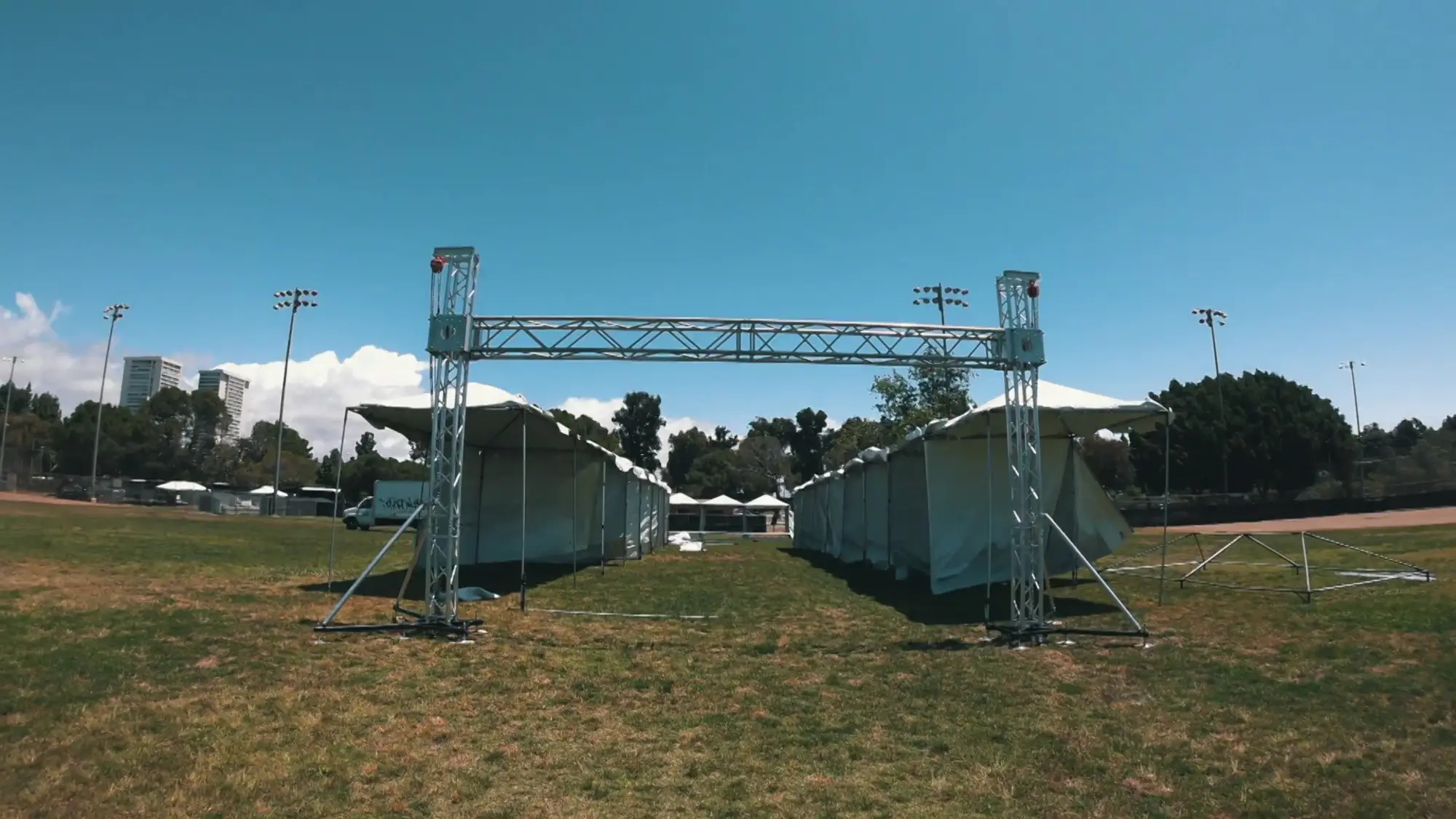
Build day, as the site takes shape
Permits and approvals
- Approvals mapped by trigger before anything is booked
- Lead times built into the production schedule
- Insurance certificates collected from every vendor
Stages and production
- Multiple performance stages
- Sound, lighting and screens per stage
- Power distribution across the site
- Build and breakdown schedules for open ground
Programming and artists
- Continuous programming across stages
- Set times and changeovers
- Artist scheduling and advancing
- Green rooms and backstage access
Vendors and amusements
- A site plan for hundreds of vendors
- A vendor load-in schedule
- Amusement areas with their own flow
Getting people there
- Shuttle loops and parking
- Drop-off zones and accessible routes
- Wayfinding for a crowd that arrives at once
Safety and security
- Security staffing and perimeters
- Emergency access kept clear
- Communication and incident roles agreed in advance
At the Rancho Park festival, security operations were coordinated directly with the LAPD, LAFD and DOT.
Where public events go wrong
Crowds forgive a lot.
Permits and queues they don't.
Where it usually breaks
What we do instead
Permits arrive after the vendors are booked.
The approvals are mapped first: which offices, which applications, which lead times. Vendor contracts, stage specs and the site plan are written to match.
The crowd arrives all at once.
Gate times, shuttle loops, parking and drop-off zones are planned from the expected arrival pattern, with staff and signage where the queues will actually form.
Stages drown each other out.
Stage placement, speaker orientation and set times are planned together, so a headliner on one stage doesn't bury a dance troupe on another.
Nobody owns the whole site on the day.
One lead producer and one site map that every team works from, with named contacts for security, vendors and park staff agreed before the gates open.
An empty field has nothing a building would.
Power, restrooms, shade, water, evening lighting and waste are planned and brought in, and handing the site back is part of the plan.
Festival work
A cultural festival
at Rancho Park.
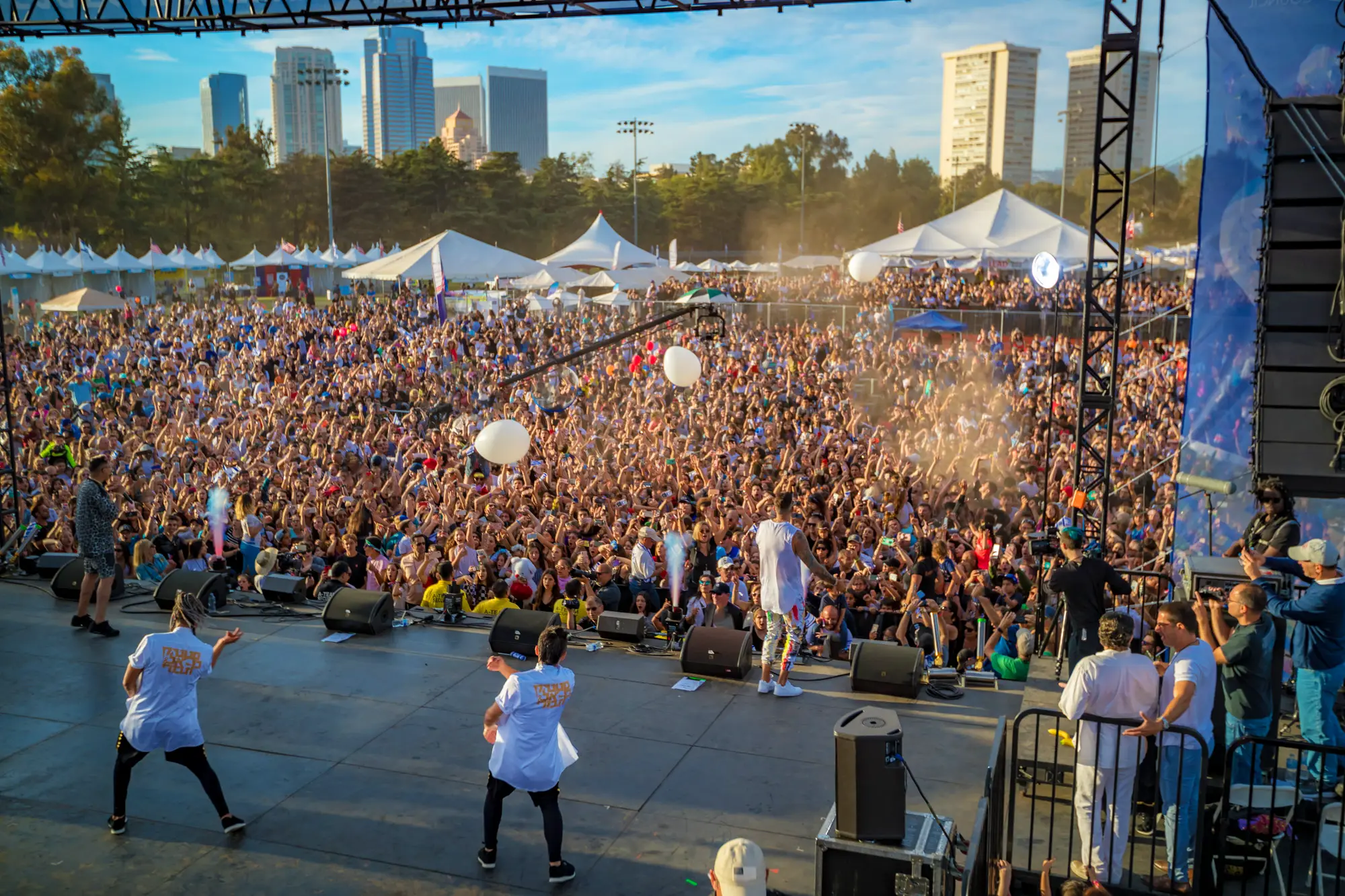
Main stage, Rancho Park Cultural Festival
Proof · Rancho Park Cultural Festival
Multiple stages, hundreds of vendors, dozens of artists
One of the largest annual cultural events in Los Angeles, built from the ground up each year: multiple performance stages with continuous live programming, dozens of artists, hundreds of vendors, amusements, shuttle and parking logistics, and security coordinated directly with the LAPD, LAFD and DOT. It welcomes more than 10,000 people a year, close to 15,000 at its peak.
- More than 10,000 attendees a year
- Multiple performance stages
- Hundreds of vendors
- Security coordinated with LAPD, LAFD and DOT
Rancho Park Cultural Festival
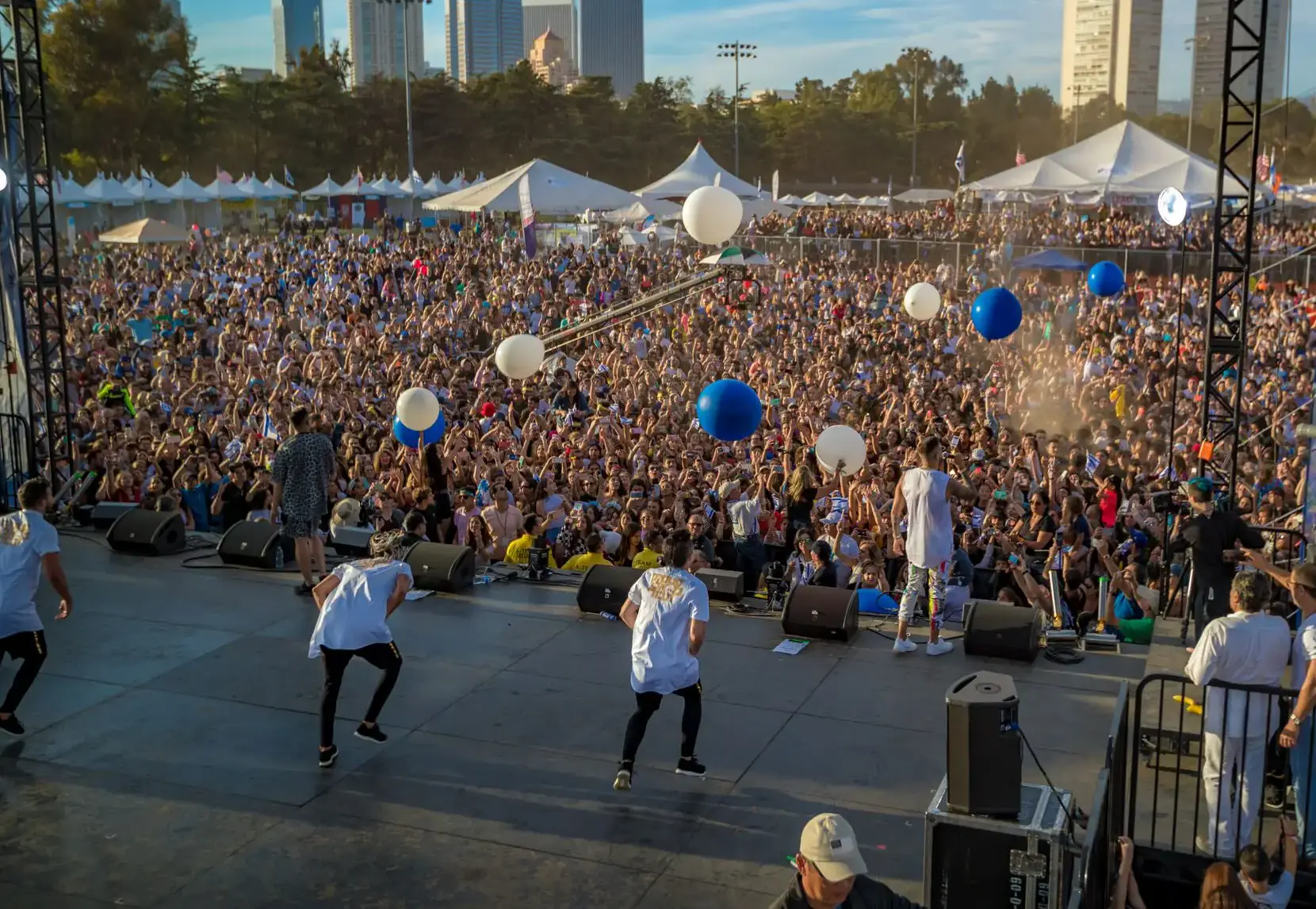
Main-stage crowd, Rancho Park Cultural Festival 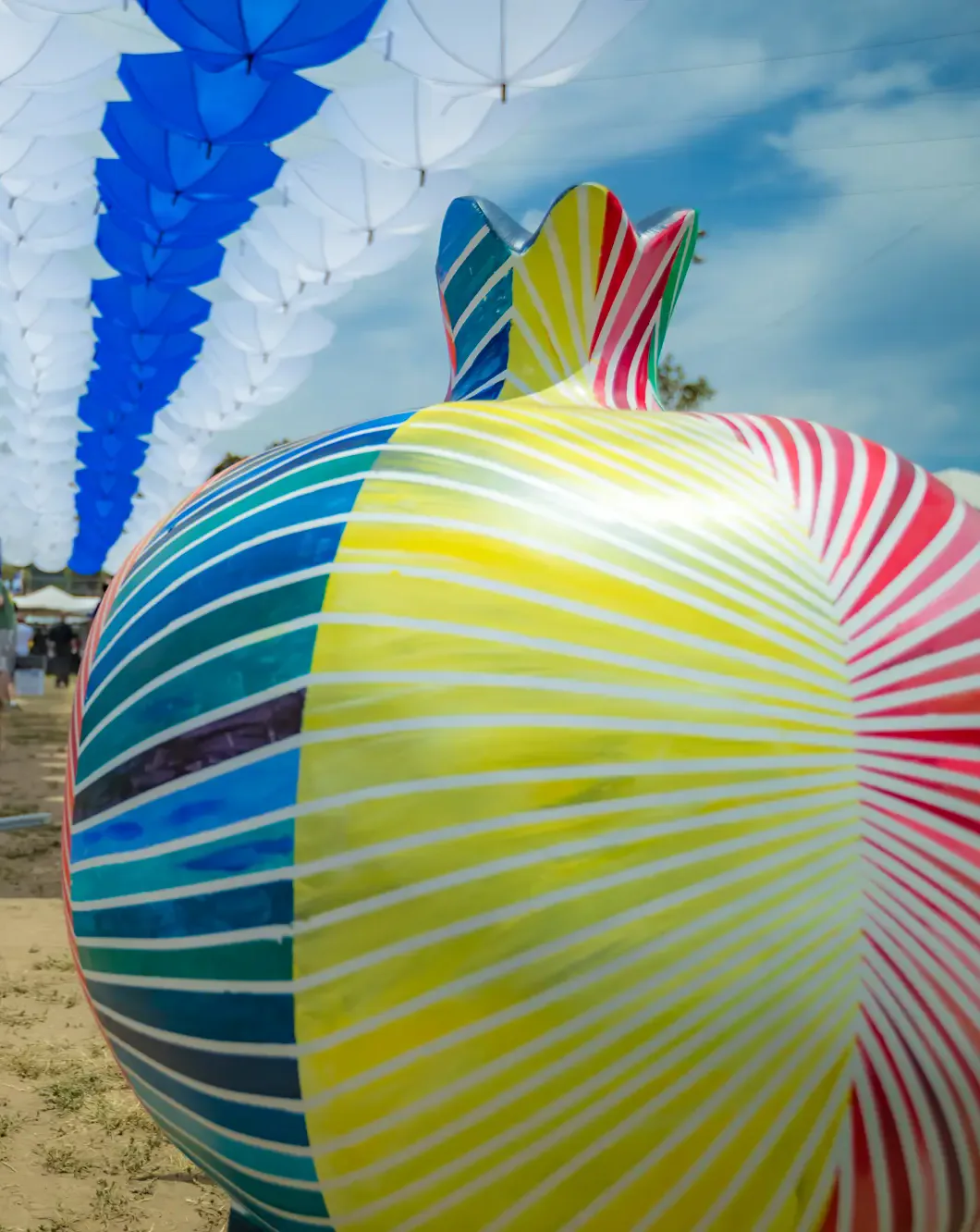
Art installation, Rancho Park Cultural Festival 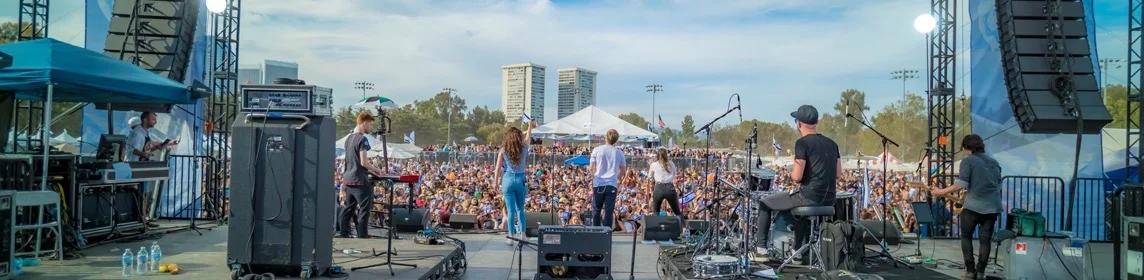
Rancho Park Cultural Festival
[They] brought our festival to life in ways we never imagined. Every year they raise the bar even higher.
Planning phases
How a festival comes together,
from first call to breakdown.
Before
Discovery, proposal and production planning
- Site, dates, hours and expected crowd
- A proposal with line items, refined as the scope is confirmed
- A site plan: stages, vendor rows, amusements, restrooms, power, shade, water, waste and emergency access
- Approvals mapped by trigger, with their lead times
- Programming, vendors, shuttles and parking
- A security plan, with the provider and the agencies involved
- Run of show, vendor contracts and staffing schedules
Build and show days
On-site execution
- Stages, tents, fencing and power built to the site plan
- Stage managers, technical directors and logistics coordinators on larger productions
- Site operations run from one run of show
- Breakdown responsibilities and any producer supervision agreed in the scope
After
Wrap-up
- The site handed back as agreed with the park or venue
- Vendor settlements and budget reconciliation, as agreed
- A debrief with your team, if requested
- For an annual festival, notes for next year's plan
How each part works: on-site event production, AV, lighting and stage production, vendor sourcing and management, permits and venue requirements.
Permits
What permits a festival needs
in Los Angeles.
This work sits in our Permits & Venue Requirements discipline. Who files each application is agreed in the scope, and no approval can be promised in advance.
A map, not legal advice. It covers the City of Los Angeles; other cities set their own rules. Every source is linked in our guide to event permits in Los Angeles.
If the festival…
- Uses a City park (more than 100 people)
- Recreation and Parks proposal, at least 60 days ahead
- Runs after sunset in a park
- Extra permission from Recreation and Parks and other agencies
- Closes a street or uses the right-of-way
- StreetsLA special event permit, 45 days ahead
- Includes a parade or public assembly
- Police special events permit, at least 40 days ahead
- Builds stages, tents, bleachers or tall structures
- Building and Safety, after fire and police sign-off
- Uses open flame, fire performers or pyrotechnics
- Fire department special permits
- Sells or gives food to the public
- County Public Health organizer permit, 30 days ahead
- Amplifies sound outdoors
- Municipal code noise limits
- Is filmed for a production
- FilmLA, a separate permit
Safety and security
How security works
at a large public event.
Every plan depends on the site, the crowd and the agencies involved. This is how responsibilities usually divide; it is planning guidance, not security or legal advice.
Who does what
- Organizer
- Approves the security plan and the crowd it is built for
- Producer
- Builds security into the site plan, from gates to emergency access
- Security provider
- Staffs the plan; who hires it is agreed in the scope
- Police, fire and transportation
- Security operations coordinated with them, as the event requires
- Approvals
- Park proposals include a security plan; the fire department sets occupancy loads
Questions
Festivals and public events,
your questions.
What does a festival production company do?
It turns a festival's vision into a working operation: the site plan, stages and production, artist and program scheduling, vendors and amusements, transport and parking, security planning and show-day operations. The organizer owns the vision, the program and the audience; the producer coordinates what has to be built, scheduled and approved, with responsibilities agreed in the scope.
What an event producer doesWhat permits does a festival need in Los Angeles?
It depends on the site and what you bring to it. A City park, a street closure, tents and stages, open flame, food for the public and amplified sound each involve a different City or County office, with minimum lead times of 30 to 60 days. Permits & Venue Requirements is one of our service disciplines, and who files each application is agreed in the scope.
Event permits in Los AngelesHow does security work at a large public event?
Security is planned with the site: perimeters, gates, emergency access, staffing and how people arrive and leave. A specialist security provider staffs the plan, and security operations are coordinated with the agencies involved. At the Rancho Park festival, they were coordinated directly with the LAPD, LAFD and DOT.
How far in advance should we start planning a festival?
Our starting guidance for a large public event is nine to twelve months, subject to scope and availability. Permit lead times sit inside that window as minimums: at least 60 days for a large event in a City park, 45 for a street closure and 30 for food served to the public.
How far ahead to plan a corporate eventHow many attendees can you plan for?
The cultural festival Event Pros LA has produced at Rancho Park for multiple years welcomes more than 10,000 people a year and close to 15,000 at its peak. Expected attendance drives the permit path, security staffing, restrooms, shuttles and parking, so we plan all of them from that number.
Can you produce a festival outside Los Angeles?
Yes. We're based in Los Angeles and travel for public events elsewhere, subject to scope. The production method travels; the permits, agencies and local vendors are researched fresh for each city.
Do you handle vendors and sponsors?
Yes: the vendor site plan and load-in schedule, plus sponsor signage and activations placed where people will see them.
Event signage and wayfindingStart a project
Tell us about the festival.
The site, the dates and hours, and the crowd you expect. Our team will follow up to discuss your event.