
Evaluate a Los Angeles corporate event venue beyond its photos. Check layouts, production access, AV, hospitality, guest travel and the full operating cost.
Check venue layouts, access, suppliers, technical systems and guest experience before committing to the site.
Choose a corporate event venue by testing it against the program, guest experience, production requirements and total operating cost. Confirm the usable layout, access hours, technical infrastructure, supplier rules, hospitality arrangements and guest routes before committing. A venue that looks right in photographs still needs to work during setup, the live event and breakdown.
Key takeaways
- Evaluate the actual event layout rather than relying on advertised capacity.
- Check access, technical needs, supplier rules and hospitality together.
- Compare the complete operating scope and resolve critical questions before booking.
For a Los Angeles event, begin with where your guests are coming from and what the program needs to accomplish. A venue search becomes more useful when it is a comparison of requirements instead of a tour of attractive rooms.
Should you choose the venue or the producer first?
When the event has substantial technical, layout or installation requirements, involving production expertise before the venue decision can help identify constraints early. The producer can evaluate whether the site supports the proposed program and what additional work it would require.
You can also hire a producer after booking. Share the contract, access schedule, floor plans and venue rules immediately so the team can work within the commitments already made. Avoid presenting a concept as final before its feasibility has been reviewed.
If venue selection is the only support you need, a standalone venue sourcing engagement can be scoped around search and evaluation while your team retains the rest of the event.
Does the space fit the program in its real configuration?
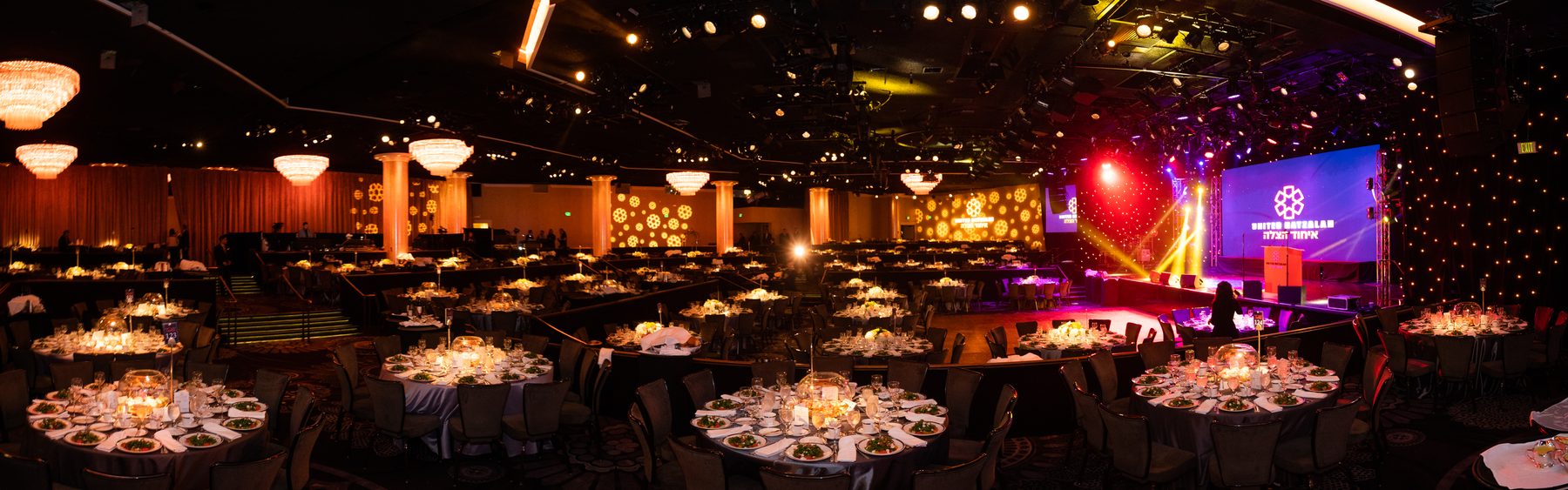
Ask to see the event layout, not just the room's largest advertised capacity. A stage, technical control position, sponsor area, buffet, accessible circulation and service routes all use space. The right layout depends on the activities planned and the venue's approved requirements.
Test sightlines from the seats that matter. Can guests see presentations and speakers? Can staff serve the room without moving through a critical camera position or presentation area? Where do people wait before entering, and what happens when a session ends?
For conferences, review simultaneous activities. A generous main room may still be a poor fit if there are too few breakout spaces or the reception requires a room change that cannot happen within the available time.
How will guests arrive and move through the site?
Map the journey from transport arrival to check-in, the main program, meals and departure. For a local audience, understand likely arrival modes and communicate the entrance and parking arrangements clearly. For traveling attendees, consider the relationship between accommodation and the event site.
Ask the venue to explain accessible arrival routes and the facilities relevant to your audience. Assess the actual event layout with the venue and appropriate specialists; a general statement about the building does not answer every question created by a temporary setup.
Think about timing as well as distance. A single check-in point may work for staggered arrivals and become difficult when several groups arrive together. The solution might involve a different location, additional staffing or a revised arrival plan.
What access do suppliers receive?
Confirm the periods available for delivery, installation, rehearsal and breakdown. Guest-facing rental hours may differ from production access. Ask what activities are permitted during each period and whether other events share the loading or service areas.
Review the route from the unloading point to the event space. Doors, lifts, corridors, loading schedules and storage arrangements can affect how equipment and materials reach their destination. The relevant production partners should check the requirements for the elements they will bring.
Document what happens after the program ends. Where can empty cases remain? When must the space be cleared? Who coordinates collection? A beautiful guest experience still needs a workable departure plan for the production.
What technical infrastructure is available?
Give the technical team the actual program: presentations, panels, performances, demonstrations, recording or remote participation. Ask it to assess sound, lighting, screens, power and connectivity with the venue.
Do not assume the word "AV included" means the system can support your program. Clarify equipment, operators, installation, testing and access to venue systems. Ask which services must be provided or connected by the venue's designated suppliers.
For a demonstration or hybrid session, test the intended content and connection method rather than relying only on a general internet description. Our conference AV checklist explains the questions that belong in that review.
Which suppliers and services are required?
Ask for current venue policies governing catering, technical services, rigging, staffing, security and other relevant categories. Identify what is exclusive, what can be supplied externally and what approvals or coordination are necessary.
Then compare the venue as a complete operating environment. A room with a higher rental charge may include useful infrastructure. A less expensive space may require additional rentals, labor or temporary facilities. Neither is automatically a better value until the same event is priced in both.
Event Pros LA can work with venue-required and client-selected vendors. Venue evaluation should make those relationships visible before design and production assumptions become commitments.
Can hospitality operate without disrupting the program?
Review meal timing, service areas, preparation space and the movement of service staff. Confirm how dietary requests will be communicated and how guests will identify the service intended for them. Discuss specific food-safety or allergen questions directly with the responsible catering professionals.
For a gala, consider how dinner service relates to speeches and stage moments. For a conference, consider how breaks affect queues and movement between rooms. For VIP guests, decide whether a separate waiting or hospitality space is useful and who will manage access.
The practical question is whether the venue supports the experience you want throughout the event, including moments that are absent from the room's marketing photographs.
What happens if the plan needs to change?
Ask how the venue handles changes in attendance, room usage, access hours or the schedule. Have the relevant contract terms reviewed through your organization's normal process. The production team should explain the operational consequences of those changes.
If the program uses outdoor space, discuss the alternative arrangement and the decision process for using it. Is the alternate space actually available? Can it accommodate the required activities? What changes would suppliers need to make, and by when?
Avoid treating a vaguely identified indoor room as a complete backup plan. The alternative should be checked against the event's real requirements, with costs, responsibilities and decision timing understood.
Compare venues with the same worksheet
Use this as an evaluation aid, not a substitute for site-specific technical or regulatory review.
Compare venues with the same worksheet
Program fit
Guest arrival
Accessibility
Production access
Technical services
Hospitality
Commercial scope
Alternative plan
Mark unanswered items as open. Do not give a venue a favorable rating simply because a required detail has not yet been priced or checked.
What should you document after a site visit?
Record the decision-relevant findings, photographs you are permitted to take and questions requiring confirmation. Attach the current floor plan and note which version was discussed. Distinguish the venue representative's confirmed information from your team's assumptions.
Send a concise follow-up list to the venue and affected suppliers. A helpful entry says, "Confirm access for rehearsal on the preceding afternoon," rather than "Rehearsal should be fine." Assign an owner and a date for resolving each critical item.
Keep the comparison connected to the brief. If a site requires changing an essential part of the event, have the decision-maker approve that tradeoff explicitly rather than allowing it to emerge during production.
Frequently asked questions
Is a hotel always easier than a nontraditional venue?
No venue type is universally easier. Hotels may provide useful meeting and hospitality infrastructure, while other sites may suit the brief more closely. Compare the particular program, access, supplier requirements and total operating scope.
Can I use a venue's advertised capacity as my guest count?
Use it as an initial reference, then confirm the proposed event configuration with the venue and relevant reviewers. Staging, seating, service and circulation affect what the usable plan looks like.
Does the venue handle every permit or approval?
Do not assume so. Ask which approvals the venue covers and which depend on the event's activities and setup. Assign responsibility for confirming applicable requirements. Our Los Angeles event permits guide is a starting point for that separate review.
Evaluate the site before you commit
Event Pros LA can support venue sourcing as a defined service or within a full production engagement. Share your event requirements, including what is fixed and what can change, so the search starts with the way your event needs to work.
Found this useful? Share it.
Planning an event?
Get a clear, itemized proposal.
Tell us the date, the guest count and the support you need, whether it's one service or the full production. Pricing follows a discovery call, with the scope and the costs itemized.
Share